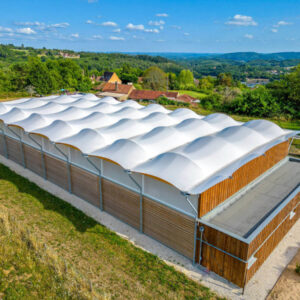
MASS TIMBER VS STEEL: DIFFERENCES, ADVANTAGES AND COMPLEMENTARITY IN SPORTS CONSTRUCTION
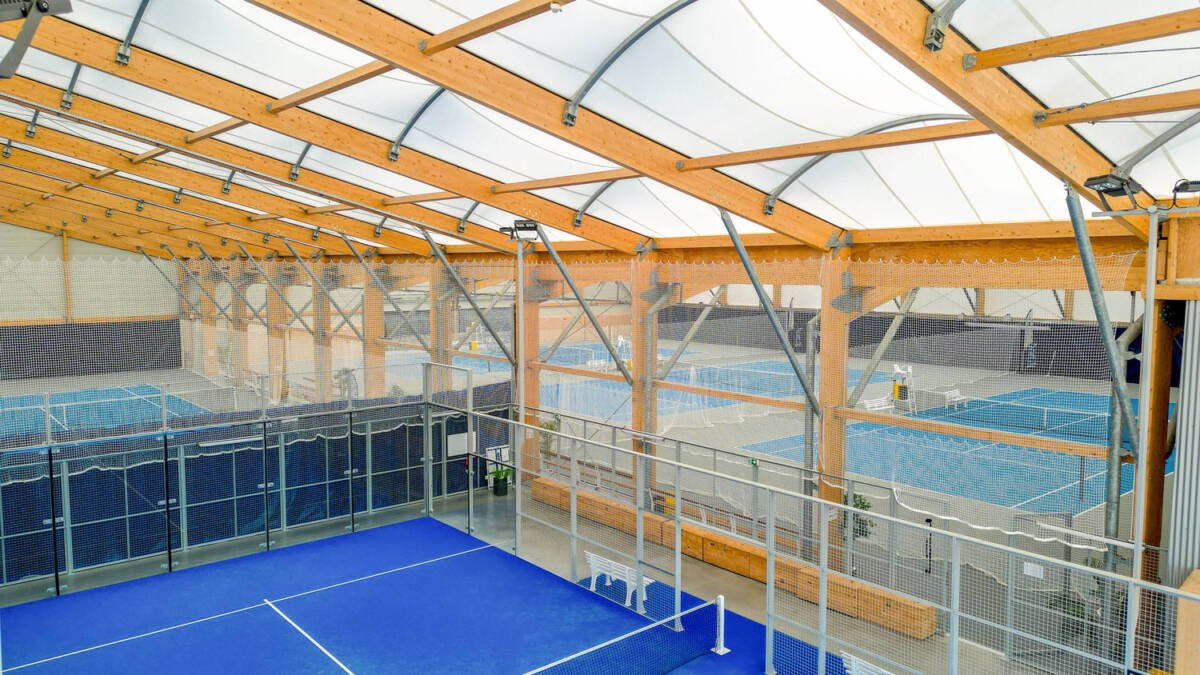
In sports facility construction, the choice of structural materials is critical: timber or steel? These two systems reflect fundamentally different construction philosophies. What are the key differences between timber and steel? What advantages does timber offer compared to steel? And why can their combination sometimes provide the optimal solution?
Glulam timber Frame vs Steel: Two Distinct Structural Approaches
Glulam timber (glued laminated timber) is an engineered wood product made by bonding multiple layers of dimensioned lumber together under pressure to form high-strength, large-span structural members—distinct from solid sawn timber in its enhanced performance, stability, and design flexibility.
Timber Construction: A Bio-Based, High-Performance and Sustainable Solution
Glulam timber is a renewable material that delivers natural performance and is particularly well suited for covered sports facilities.
Whether designed as a timber frame, a mass timber system, or a glulam structure, timber offers significant structural and environmental benefits.
Key advantages include:
- Low carbon footprint: timber stores CO₂ throughout its entire lifecycle.
- Excellent strength-to-weight ratio: at equal weight, timber delivers outstanding structural performance.
- Predictable fire behavior: contrary to common misconceptions, mass timber maintains its structural capacity longer than unprotected steel during a fire event.
- Low thermal conductivity: reduces thermal bridging.
- Warm, natural aesthetics: ideal for sports facilities welcoming athletes and spectators.
- Lightweight structure: reduces foundation loads and overall structural demands.
In sports buildings, a glulam structure allows for large clear spans while creating bright, welcoming, and comfortable interior volumes for users.
Steel: Structural Precision and Tensile Performance
Steel has historically been widely used in industrial and sports construction. It is recognized for its high tensile strength, its ability to handle concentrated loads, and its slender structural sections.
However, steel also presents certain limitations:
- High carbon footprint during manufacturing
- Sensitivity to corrosion
- High thermal conductivity
- Rapid loss of mechanical strength in case of fire without adequate fire protection
Why Choose a Timber Frame Structure Over Steel?
From a sustainable construction perspective, timber directly addresses today’s environmental performance challenges. While steel production is energy-intensive and highly carbon-emitting, mass timber construction supports the decarbonization goals of the building sector.
Beyond environmental benefits, a timber frame system provides a strong architectural identity. Exposed glulam beams enhance the visual appeal of a sports facility while improving its integration within the surrounding landscape.
Timber structures contribute not only to sustainability goals but also to user comfort and long-term asset value.
Mass timber and Steel: A Smart Structural Complementarity
The debate between timber and steel should not be reduced to simple opposition. Timber fully addresses environmental, architectural, and comfort requirements, while steel can provide targeted technical solutions.
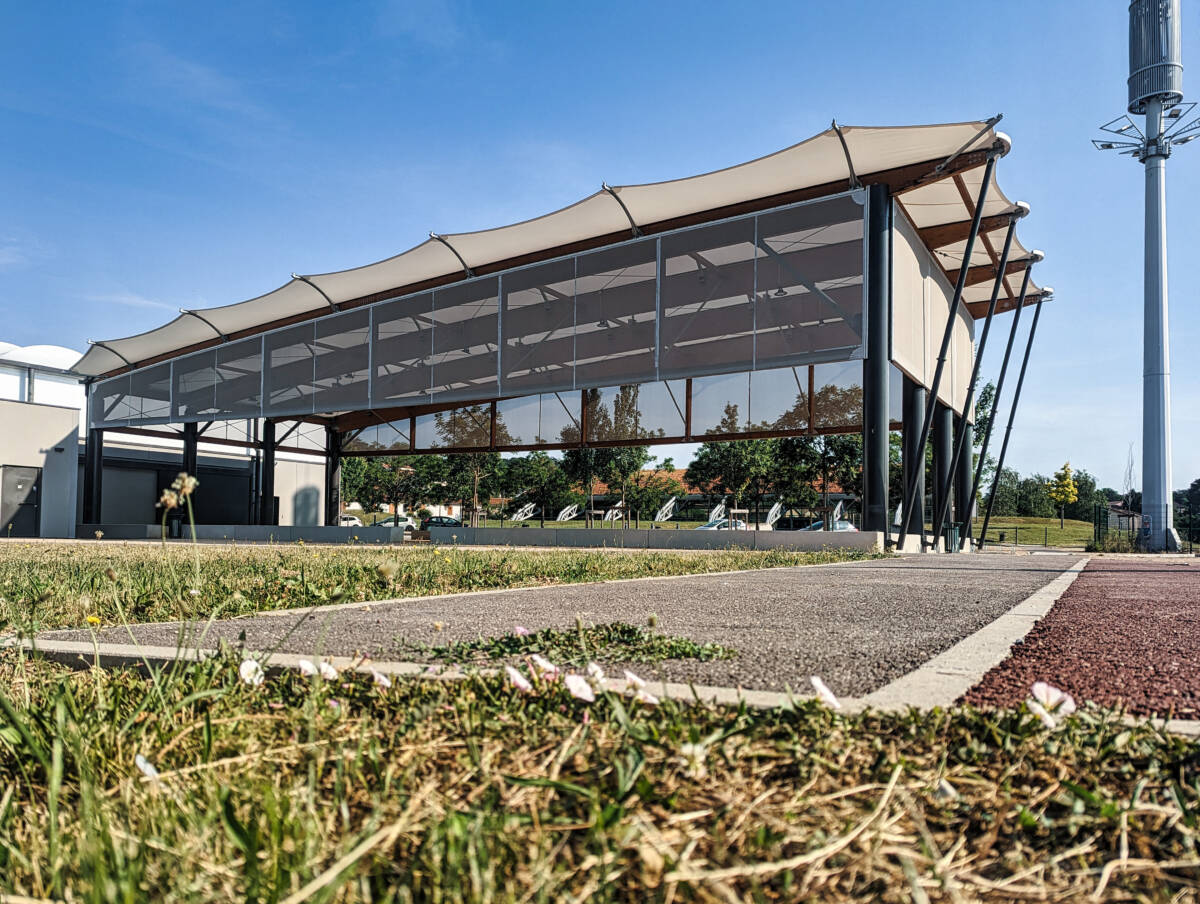
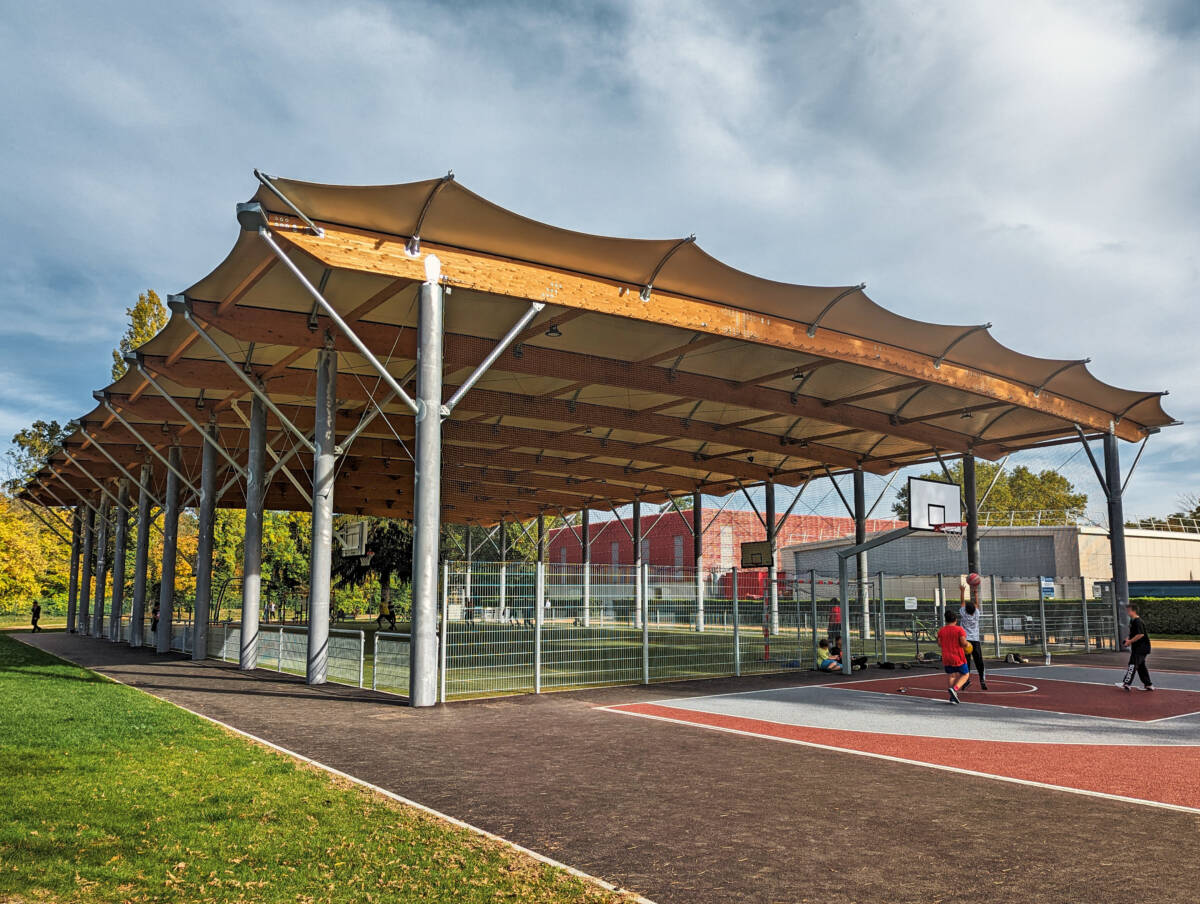
Combining a timber frame or glulam structure with steel components allows engineers to optimize performance in specific conditions, such as enhancing structural connections, managing tensile forces, accommodating complex assemblies and refining certain structural sections
This hybrid approach preserves the environmental and architectural benefits of mass timber while leveraging the specific mechanical properties of steel where needed.
At SMC2, specialists in timber and membrane sports structures, we prioritize mass timber and glulam structural systems for their environmental, architectural, and technical performance. Steel becomes a complementary technical ally when it enhances the overall structural efficiency of the project.
By combining innovation in timber frame engineering with targeted steel integration, we deliver high-performance, durable, and sustainable sports facilities tailored to the specific constraints of each project.